Introducing Tracking Company Claims.
The quantum computing market has grown from a collection of businesses conducting R&D in labs to a set of commercializers receiving significant state and private investment. Companies are beginning to mature and produce systems that are available on the cloud and installed at customer sites.
Along the way company leaders have made an effort to keep the public informed about their progress and future prospects. As with all technology companies, especially frontier tech companies, a claim a company makes may or may not materialize. Apple didn’t deliver on its roll-out of AI in 2024. Tesla’s full self-driving products have taken years to arrive. Intel has been repeatedly late on delivering their products.
It’s not a surprise that things can go wrong. In some cases, company leadership is just too optimistic. In some cases, dependencies fall through. And, in other cases resources get allocated to other initiatives. Commercializing exotic technology is very hard. The old Mike Tyson adage seems apt here, “Everyone has a plan until they get punched in the face.”
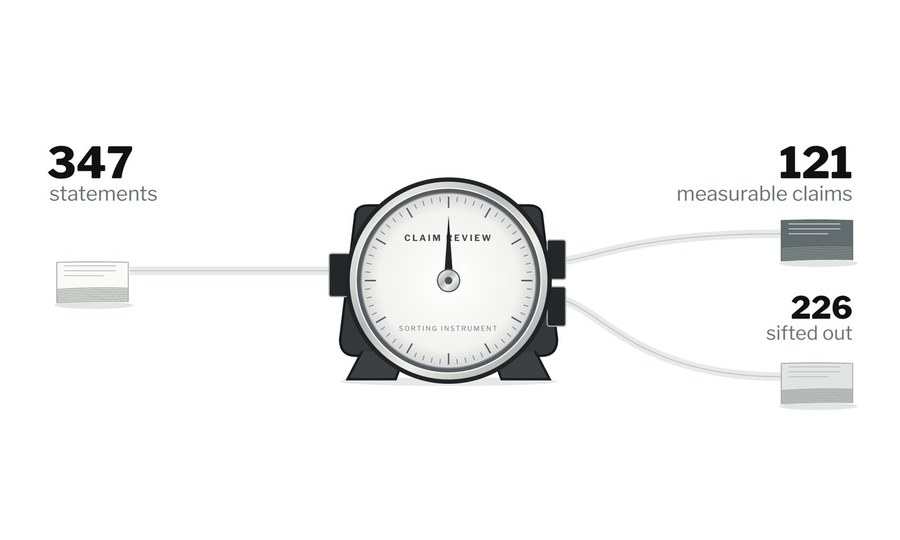
I evaluated 347 forward-looking statements from quantum companies, including 9 public companies and 3 private companies, from 2016 through November 2026. Claims were evaluated on three rules: they are measurable, can be linked back to a company representative and the projected due date fell between 2020 and 2030. The result is 121 forward-looking statements. Seventy-nine claims have either completed, in full or in part, or were simply missed and never completed. Forty-two are still open. Sixteen of those come due from 2027 through 2030, and are related to quantum’s progress towards fault-tolerant quantum computing (FTQC).
The analysis tells us that quantum hardware companies deliver a little better than half the time, and miss delivering a third of the time. The data gives us a chance to compare these 12 companies to each other on their ability to plan and execute. It also provides a chance to see if missed claims decrease over time, and if the emerging FTQC era will be different from the receding noisy intermediate scale quantum computing (NISQ) era.
Not all companies are equal. Some have been active for over a decade, like IonQ and IBM. Each have over 20 claims. While some are less than a year old, as Oratomic is, and have 1 claim. I’ve included Oratomic because they have incredible pedigree, including John Preskill who is a member of the founding team. And, in a short period, they have raised $775M and are valued at $5.4B. They have also published bold papers for cryptographically relevant quantum computers.
PsiQuantum is also in the list. They are 10 years old and have 5 claims, including 3 misses. They have received over $4.1B in funding from public and private investors. Given their ambition to build two large scale quantum data centers in Australia and the US they are worth monitoring.
Tracking claims is an attempt to separate hype from progress, as well as identify which companies follow the “do what you say, and say what you do” ethos. The quantum computing sector is in an interesting phase of its development not just because AI is beginning to show impact, but because most of the prior work is R&D and demonstrations. The true test of quantum will be paying customers. For that we will have to wait and see what happens.
About the use of AI: I conceived of this study, directed AI to conduct research and source claims. I authored the editorial, designed content presentation and directed AI to develop the page.