How Do We Get From Qubits to Quantum-Native Businesses
01. Developing physical qubits
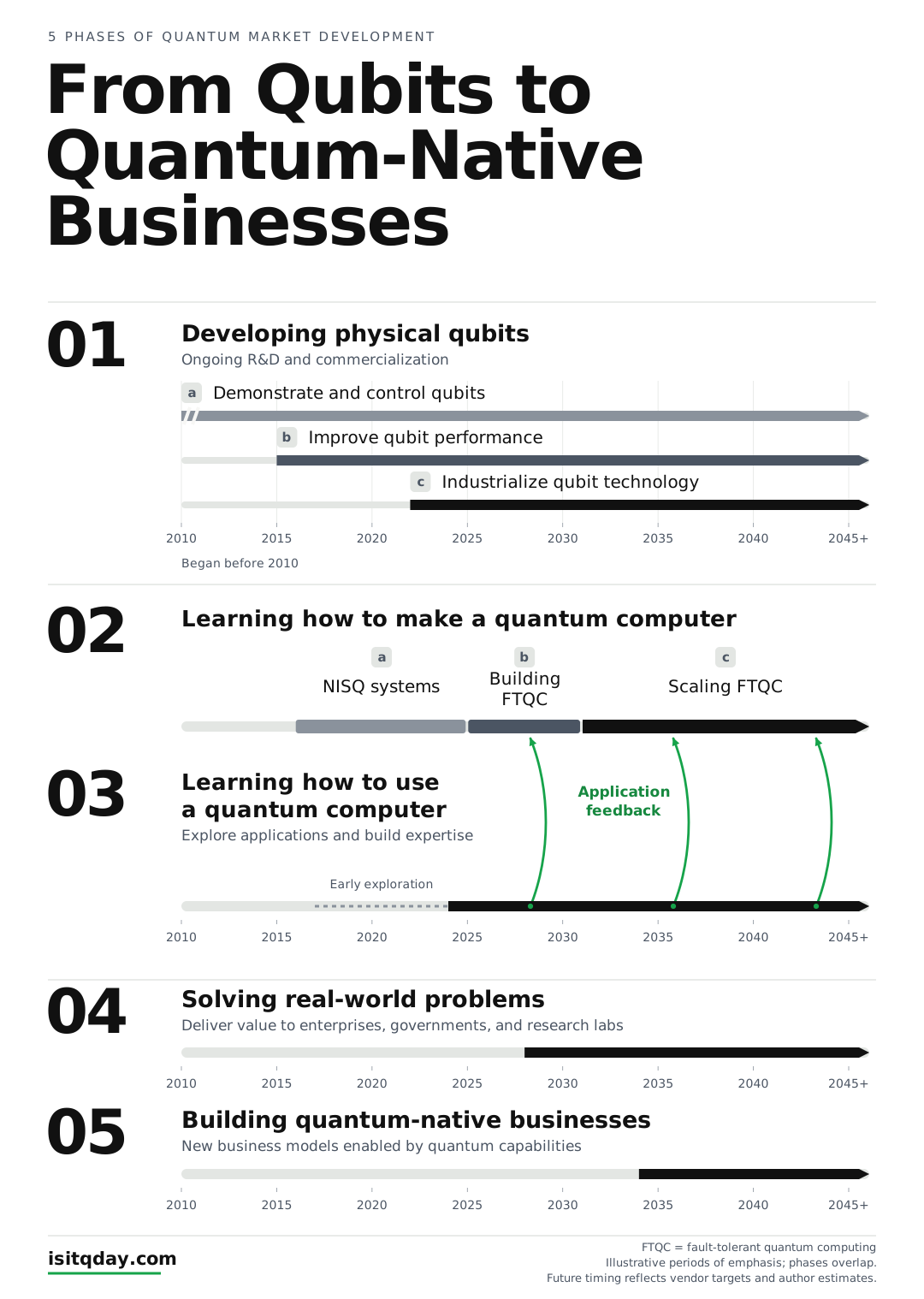
The fundamental components of a quantum computer are qubits, and the effort to make stable, consistent, and reliable qubits is central to making both commercial and cryptographically relevant quantum computers. The first step in developing the technology is to develop physical qubits that can be controlled and measured. Early work in this field extends back into the 1990s. By the 2010s, several companies were working toward developing stable qubits that could then be integrated into a QPU with control, addressing, and measurement. This work continues today and will continue for the foreseeable future. I have mapped out three workstreams in step one: (a) demonstrating and controlling qubits; (b) improving qubit performance, including coherence times, gate fidelity, and readout fidelity; and © industrializing qubit technology, including selecting materials and integrating them into manufacturing substrates (e.g., CMOS).
02. Learning how to make a quantum computer
Once researchers could control individual qubits and perform entangling operations between them, the challenge expanded from making qubits to building a quantum computer. That requires a complex set of subsystems for qubit control and readout, calibration, quantum error correction with real-time classical decoding, quantum memory, and connections that move quantum information between QPUs. For more than a decade, all quantum computer development has been for the sake of learning how to make a quantum computer. Yes, it is true that several providers have made their systems available in the cloud or have sold systems to governments and research institutions, but the utilization of these systems by customers is in the spirit of acquiring market or end-user feedback in order to improve upon the next generation. Commercialization is a forcing function for moving out of labs and into the real world. The FTQC era will have several sub-phases, from building the first generations of FTQC to scaling them up. Each brings new R&D and commercialization challenges.
03. Learning how to use a quantum computer
While many in the industry will state that FTQC is an engineering challenge, phase 3, “Learning how to use a quantum computer,” is critical to enabling customers and developing the workforce. It is also critical to have tightly coupled feedback loops between users of FTQC and makers of FTQC. Real-world use of these systems will contribute meaningfully to the design and engineering of future generations of FTQC.
04. Solving real-world problems
When users are familiar with the concepts embedded in algorithms and understand the capabilities of these new computers, they can then apply their know-how to solve real-world problems found in their businesses. While quantum computing has been out of the labs for several years, it is my belief that time spent working with FTQC is a critical phase. Everyone who has, for example, run QAOA on a 32-qubit system or simulator knows that it is a useful learning environment, but it fails to beat classical benchmarks. Learning combined with FTQC leads to solving real-world problems. One requires the other, and businesses that invest in workforce development earlier will benefit sooner. I forecast that this begins as early as late 2027, and most likely in 2028.
05. Building quantum-native businesses
If you have read my Three Phases of the Quantum Computing Market, you will know that I see one of the major evolutions in the market as the move from existing businesses using quantum in their operations to quantum-native businesses built around this new computing paradigm. These are not providers of quantum technologies; they are builders who use quantum’s unique capabilities to create new businesses. This might signal the beginning of the quantum revolution, much as the beginning of the mobile revolution occurred with widespread availability of broadband mobile networks and significant market penetration of mobile phones. I forecast that this part of the market emerges around 2033–34 based on vendor roadmaps and corporate customers having had 5–7 years working with quantum computers and technologies.
The first useful FTQC systems will give existing businesses new tools. The larger market shift comes after people have spent years learning what those tools can do, then build companies around capabilities that did not exist before. That is the transition from solving problems with quantum computers to building quantum-native businesses—and the transition I expect to begin around 2033–34.
The analysis and forecasts that I have provided herein are based on proprietary information I have developed as well as publicly available vendor roadmaps.